MES and quality inspection classification
MES and Quality Inspection and Sorting
Quality Inspection and Sorting (QIS) is a method of classifying products according to their quality to meet different customer needs and enhance product value. It can reduce waste and losses caused by defective products, and has been successfully implemented in many Taiwanese factories. Although combining QIS with MES and dual control limits (Control Limits) can improve accuracy, it conflicts with the principles of total quality management (TQM) and lean manufacturing (Lean Manufacturing). TQM emphasizes full participation and continuous improvement, and requires quality control at all stages. Lean manufacturing focuses on reducing waste and improving processes, not just final inspection. Therefore, most MES systems do not support this function and focus more on comprehensive quality monitoring and continuous improvement.
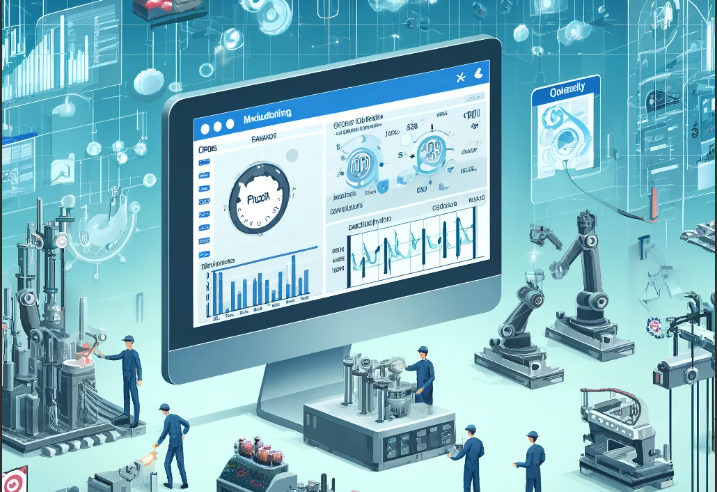
Quality inspection classification (Quality Inspection and Sorting) It refers to the process of classifying products according to their quality. This method has many benefits. It can effectively classify products of different qualities and redefine material numbers according to different quality standards to meet the needs of different customers. Through this fine classification, companies can sell high-quality products to customers with high quality requirements, while providing inferior products at lower prices to markets with lower quality requirements. This not only improves the overall value of the product, but also reduces the waste and loss of defective products. In Taiwan, many factories have already practiced this method because it can effectively solve the phenomenon of unstable production quality, improve production efficiency and product qualification rate, and ultimately enhance the competitiveness of enterprises in the market.
Today, can we put this production method throughMESSystem assistance, using two control limits (Control Limits) to select products more accurately and determine their final part numbers? The answer to this question is "technically feasible, but practically not recommended." Indeed, today'sMESThe system has powerful auxiliary capabilities and can meet the needs of quality management. by integratingSPCThe two control limits of (Control Limits),MESThe system can automatically identify the final material number of the product.
AlthoughMESCan assist this production method, but rarelyMESThe system will have this capability. The main reason is that this practice violates total quality management (TQM) spirit.TQM Emphasizing full participation and continuous improvement requires quality control at every stage of product design, manufacturing and delivery, rather than relying solely on the inspection of the final product.TQM The focus is on preventive quality control and full employee participation to ensure that every link meets quality standards, thereby reducing waste and improving efficiency. Only conducting quality inspection and material number identification at the final stage ignores quality management during the production process, which is inconsistent with TQM The core concept leads to quality problems that may not be discovered at an early stage and solved in a timely manner.
From lean management (lean manufacturing) From a perspective, if everyone involved in production management believes that quality problems can be solved at the end, then the continuous improvement of all previous processes will (continuous improvement) The focus will be biased towards improving production capacity rather than solving quality problems. The spirit of lean management is to emphasize waste reduction and continuous improvement of every stage of the production process to improve overall efficiency and product quality. If everyone believes that final inspection can solve quality problems, they will naturally ignore potential problems and defects in the previous production process, causing these problems to accumulate and affect the quality of the final product. In addition, this kind of thinking causes production teams to focus on increasing production speed and yield, while neglecting quality control and improvement in the process, which violates the core ideas of “quality first” and “every process should be perfect” in lean management. Ultimately, this not only fails to improve product quality, but may also increase the cost of rework and waste, undermining the competitiveness of the enterprise.
In summary, through quality inspection and classification at the final product stage (Quality Inspection and Sorting) The method of classifying material numbers can only solve the current problem of low product quality, but cannot fundamentally improve the quality level of the overall process. This method ignores quality control and improvement opportunities in the production process, resulting in quality problems in the previous process being unable to be discovered and resolved in a timely manner, thereby killing the opportunity to improve overall quality. Therefore, generally on the marketMESThe system is not designed with this function, but focuses more on full-process quality monitoring and continuous improvement to ensure that products meet high quality standards at every production stage.
Quality Inspection and Sorting (QIS) categorizes products based on quality, meeting diverse customer needs and enhancing product value. It reduces waste, minimizes losses from defective products, and has been successfully implemented in many Taiwanese factories. While integrating QIS with MES and dual Control Limits can enhance precision, it conflicts with Total Quality Management (TQM) and Lean Manufacturing principles. TQM emphasizes full participation and continuous improvement, requiring quality control at all stages. Lean Manufacturing focuses on reducing waste and improving processes, not just final inspections. Therefore, most MES systems do not support this function, prioritizing comprehensive quality monitoring and continuous improvement instead.
Quality Inspection and Sorting refers to the process of classifying products based on their quality. This method has multiple benefits, allowing for effective categorization of products according to different quality standards and redefining item numbers to meet various customer needs. Through this precise sorting, companies can sell high-quality products to customers with stringent quality requirements, while offering lower-quality products at lower prices to markets with less stringent requirements. This not only enhances the overall value of the products but also reduces waste and losses from defective products. In Taiwan, many factories have already implemented this method because it effectively addresses the issue of inconsistent production quality, improves production efficiency, and increases product pass rates, ultimately strengthening the company's competitiveness in the market.
Today, can we use this production method with the assistance of MES (Manufacturing Execution System) to more accurately select products and determine their final item numbers by using two Control Limits? The answer is "technically feasible, but not recommended in practice." Indeed, modern MES systems have powerful auxiliary capabilities that can meet quality management needs. By integrating the two Control Limits of SPC (Statistical Process Control), MES systems can automatically determine the final item numbers of products.
Although MES can assist this production method, few MES systems have this function. The main reason is that this approach violates the principles of Total Quality Management (TQM). TQM emphasizes full participation and continuous improvement, requiring quality control at every stage of product design, manufacturing, and delivery, rather than relying solely on final product inspection. TQM focuses on preventive quality control and full participation, ensuring that each link meets quality standards, thereby reducing waste and increasing efficiency. Relying only on final inspection and item number determination ignores quality management during the production process, which does not align with the core principles of TQM. This can lead to quality issues not being detected and addressed early.
From the perspective of Lean Manufacturing, if all those involved in production management believe that quality issues can be resolved at the end, then the focus of all previous processes' continuous improvement will shift towards increasing production capacity rather than solving quality problems. Lean Manufacturing emphasizes reducing waste and continuously improving every stage of the production process to enhance overall efficiency and product quality. If everyone believes that final inspection can resolve quality issues, they will naturally ignore potential problems and defects in the earlier production stages, causing these issues to accumulate and affect the final product quality. Moreover, this mindset will make production teams focus on increasing production speed and quantity, neglecting quality control and improvement during the process, which contradicts the Lean Manufacturing principles of "quality first" and "every process should be perfect." Ultimately, this not only fails to improve product quality but also increases rework and waste costs, harming the company's competitiveness.
In summary, performing item number classification through Quality Inspection and Sorting at the final product stage only addresses the issue of low current product quality and does not fundamentally improve the overall quality level of the manufacturing process. This method overlooks the opportunities for quality control and improvement during the production process, causing quality issues in earlier stages to go undetected and unresolved, thus stifling the chances to enhance overall quality. Therefore, most MES systems on the market do not have this function but focus more on comprehensive quality monitoring and continuous improvement to ensure that products meet high-quality standards at every production stage.