qTest & TDD integrated implementation workflow (Hilosi version)
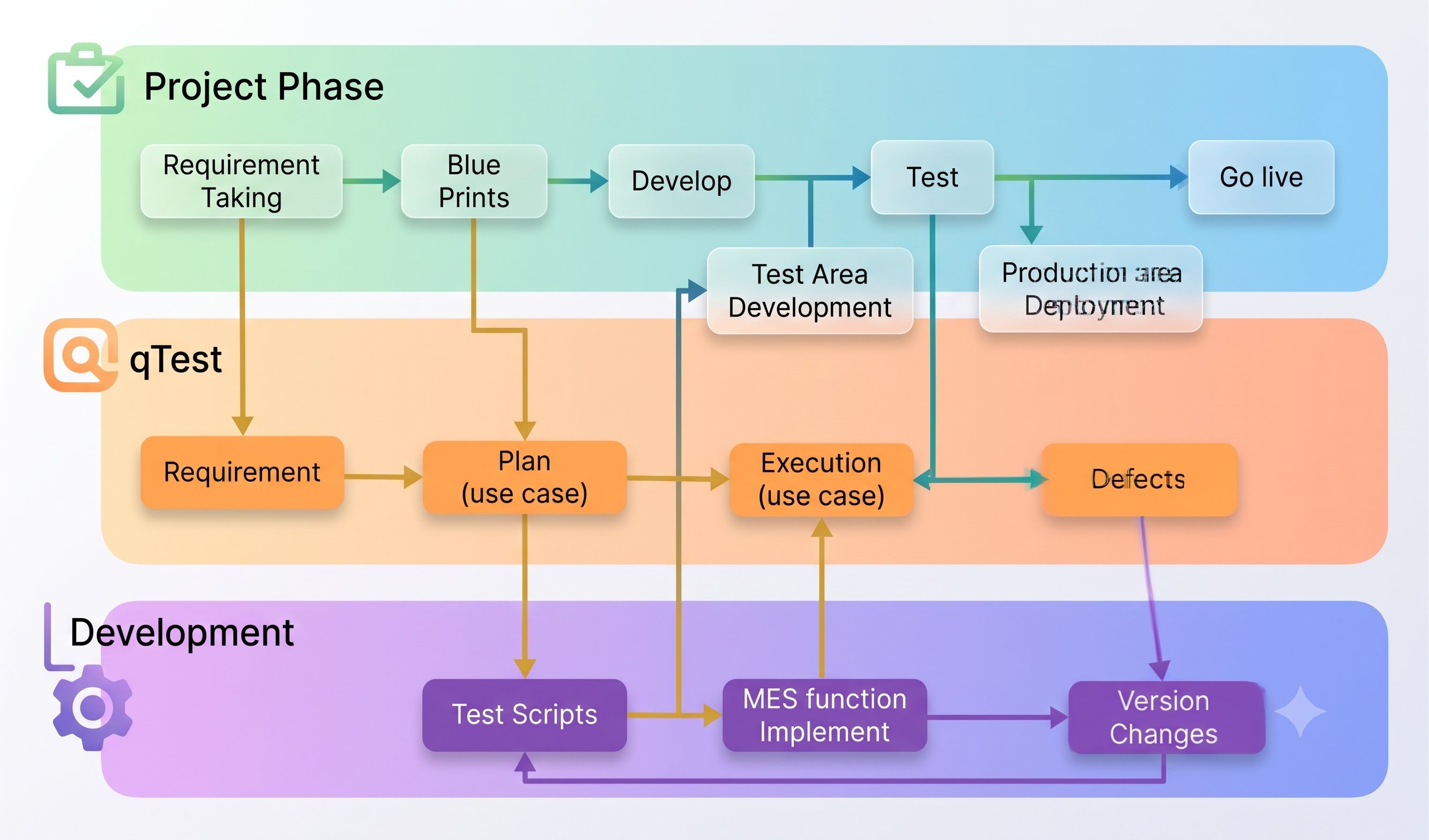
According to the TDD_flow_hilosi implementation blueprint, the interactive flow direction of the three lanes of project schedule, quality inspection platform and development self-discipline is clearly divided.
Click to enlarge image
Explanation of the three major Swimlanes and arrow flow directions
According to Hilosi's flow chart, project activities are distributed in three dimensions: **Project Phase**, **qTest** and **Development**, and follow the following specific flow directions:
Blue Arrow Flow ─ Implementation Delivery Main Line (Blue / Green Arrow)
Represents the delivery path of forward engineering, seamlessly binding schedule milestones and quality objects:
- Requirements gathering mapping: Conducted in **Project Phase**Requirement Taking, write **qTest** synchronouslyRequirementIn the module.
- Blueprint planning case: Completed in **Project Phase**Blue PrintsAfter design, convert it directly into executable in **qTest**Plan (use case)Test cases.
- Develop self-regulation tests: **Development** in laneTest ScriptsDirectly read qTest `Plan (use case)` specifications; implemented by developersMES function Implement, until the local test passes.
- System integration testing: After passing the local self-test, trigger the **Project Phase**Test Area Development, delivered to the UAT test line, with qTest'sExecution (use case)and **Project Phase** ofTestPhase-aligned execution.
Yellow Arrow Flow──Quality Defense and Unlocking Gates (Yellow Gates)
Responsible for monitoring deployment permission and automated review status:
- Automated test unlocks manual UAT: In the Development lane, onlyTest Scriptsafter passing, then unlock and approve code to proceed withTest Area Developmenttest area deployment.
- Acceptance test unlocks production release: When manual UAT testing (Execution/Test) passes and no defect remnants remain, yellow notification is sent, approving entry into **Project Phase** ofProduction area deployment (formal area deployment), ultimately achieving system go-liveGo live。
Orange/Purple loop ── TDD defect repair self-healing loop (Reactive Loop)
Responsible for handling any anomalies and correction processes that occur during UAT testing:
- Defect logging: When manual testing (Test / Execution) fails, log in qTestDefects (defects)。
- Reproduce bug via test: Defects automatically feed back to the Development lane ofVersion Changes, the development team cannot directly modify functions, but must **first modify and update Test Scripts** to reproduce that bug.
- Regression rollback: After code refraction fixes, the function must pass self-test with updated `Test Scripts` turning green before redeploying to Test Area, until Defect status in qTest flows to Resolved.