
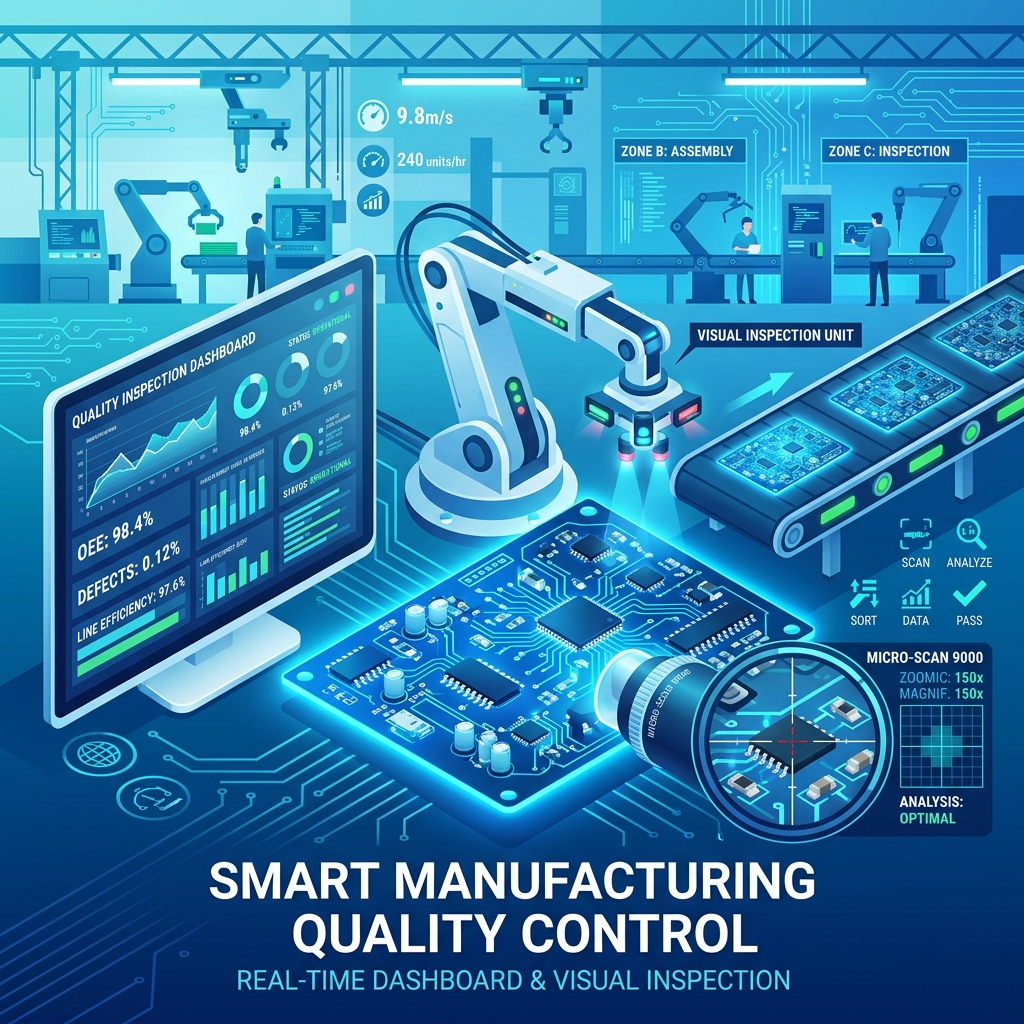
Quality Inspection and Sorting (QIS) is a method that classifies products based on their quality to meet different customer needs and enhance product value. It can reduce waste, minimize losses from defective items, and has been successfully implemented in many Taiwanese factories.
Although combining QIS with MES and Control Limits can improve the precision of quality detection, it fundamentally conflicts with the core principles of Total Quality Management (TQM) and Lean Manufacturing.
TQM emphasizes full team participation and continuous improvement, requiring rigorous and real-time quality control at all production stages and process nodes. Lean Manufacturing focuses on reducing waste and improving process robustness, with the goal of "getting it right the first time," rather than relying solely on final-stage backend inspection and sorting.
In other words, QIS essentially remains "post-event detection and remediation"; whereas TQM and Lean Manufacturing pursue "pre-event prevention and root-cause improvement." Therefore, most mainstream MES systems worldwide do not support this feature in their core functions; instead, they prioritize comprehensive quality monitoring, SPC (Statistical Process Control), and continuous improvement mechanisms.